Blog
Black Forest Villages Germany Worth Seeking Out
Published July 8, 2026
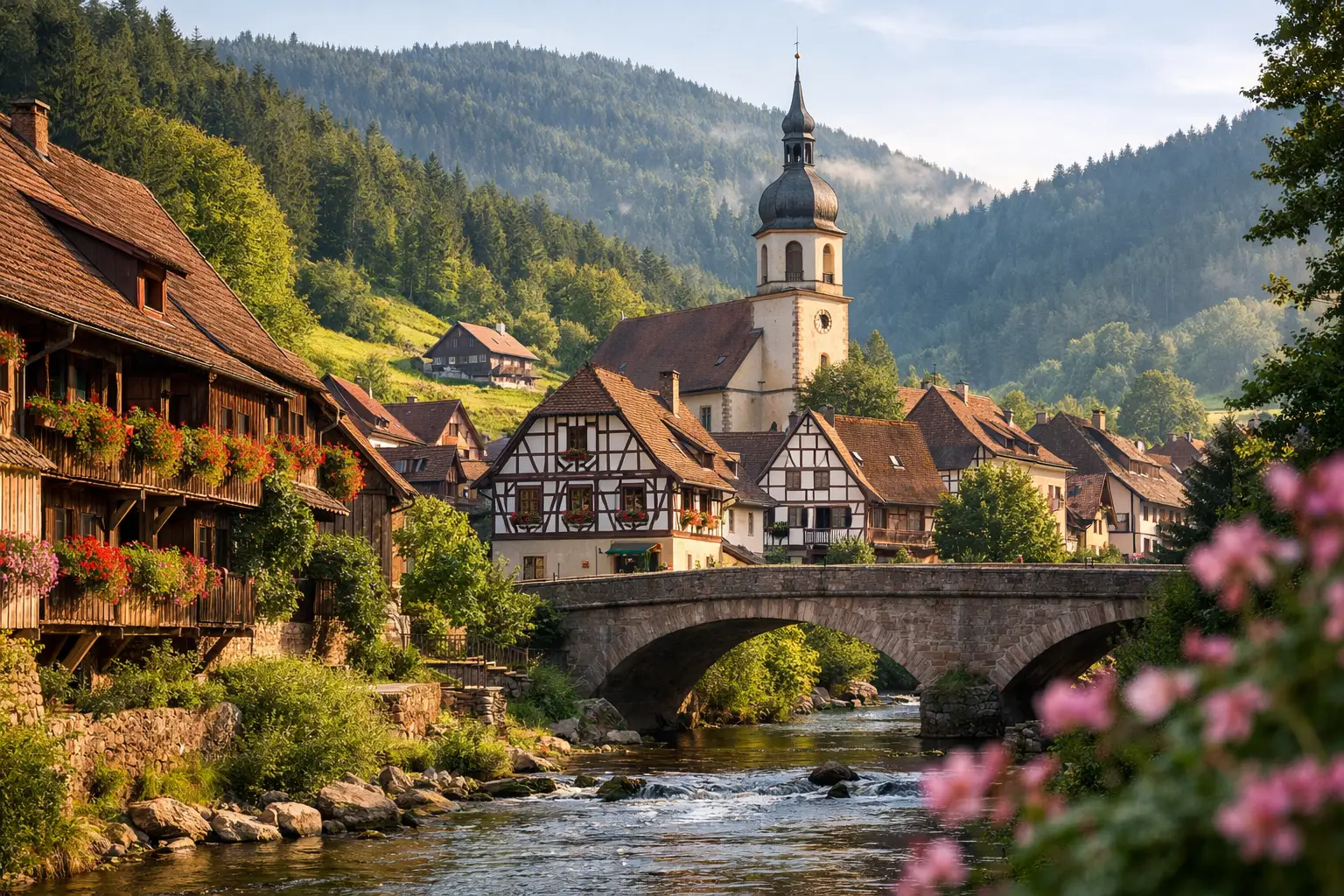
The Black Forest often enters the imagination as a backdrop first - dark pines, cuckoo clocks, cake, and a ribbon of scenic road. But the real texture of the region appears at village scale, where timber-framed inns face small church squares, farmhouses sit under vast sloping roofs, and daily life still feels shaped by altitude, weather, and old regional customs. For travelers searching for black forest villages germany, the appeal is not simply prettiness. It is the way these places hold onto a strong local identity while remaining very much lived in.
This is also where the Black Forest becomes more interesting than its postcard reputation. The region is large, stretching across southwestern Germany with notable differences between north and south, valley and upland, spa town and farming settlement. Some villages feel polished and quietly upscale. Others remain rooted in agricultural traditions, with a more rugged sense of place. If you are building an itinerary, that variation matters.
What makes Black Forest villages in Germany distinctive
A Black Forest village is rarely just a collection of charming facades. Architecture tells part of the story. You will notice farmhouses with deep eaves designed for heavy snow, balconies lined with flowers in warm months, and church steeples that seem proportioned to the surrounding hills rather than to any grand urban ambition. Wood, stone, and plaster dominate the visual language, but each subregion interprets that language differently.
Landscape matters just as much. In some villages, the forest presses close to the last row of houses. In others, open meadows and pastureland create a softer setting, with views that feel unexpectedly broad. The Black Forest can be dense and moody, but it can also be pastoral and sunlit. That mix is one reason village-hopping here is more rewarding than many first-time visitors expect.
There is a cultural layer, too. Traditional dress survives most visibly during festivals, church events, and heritage celebrations. Regional food has a hearty, local character shaped by mountain farming and woodland ingredients. Even where tourism is established, many villages still feel less like stage sets and more like communities with long memory.
The villages that best show the region’s character
Gutach and the farmhouse landscape
Gutach, in the central Black Forest, offers one of the clearest introductions to the rural building traditions that define the region. This is where the archetypal Black Forest farmhouse makes immediate sense - long roofs dropping low over broad wooden structures built to shelter people, animals, and stored hay under one imposing silhouette.
What makes Gutach compelling is that the setting still supports the story. The village sits within a fold of green hills that feels agricultural first and touristic second. You come here less for a perfect old-town center than for a fuller picture of how settlement, farming, and architecture developed together. For travelers interested in vernacular design rather than only polished market squares, Gutach has unusual depth.
Schiltach and the river-valley townscape
Schiltach is one of those places that looks almost too composed to be real. Half-timbered houses rise at sharp angles above the meeting of two small rivers, and the center has that compact, theatrical quality common to old trading settlements built on constrained terrain. Yet it avoids feeling ornamental.
Its appeal lies in proportion and atmosphere. The houses are tall, the lanes narrow, and the terrain steep enough to create shifting perspectives as you walk. Schiltach feels more town-like than some Black Forest villages, but that is part of its value in a regional itinerary. It shows how commerce once threaded through the forest, creating settlements that were elegant without ever becoming grand.
Sasbachwalden and the vineyard edge
In the northern Black Forest, Sasbachwalden presents a different face of the region. Here the village character is shaped not just by woodland but by vineyards and a gentler, cultivated landscape. The result is a setting that feels lighter and more open than the darker forest imagery many travelers bring with them.
This is a good place to understand that the Black Forest does not have one single mood. Sasbachwalden combines traditional architecture with a wine-country sensibility, and that changes the rhythm of a visit. Walks lead as naturally into vineyard slopes as into wooded paths. If you want your Black Forest trip to include regional food and a softer landscape, this is a persuasive stop.
Bernau and the high-valley calm
Bernau, in the southern Black Forest, trades visual drama for spaciousness and quiet character. Spread through a high valley rather than condensed into one tightly packed center, it feels less immediately picturesque in the conventional sense. But for many travelers, that is exactly the point.
Bernau reveals the Black Forest as a lived mountain landscape, not merely a collection of photogenic facades. Traditional farmhouses, open pastures, and broad skies give the area a reflective quality. It suits travelers who prefer walking, lingering, and absorbing a place slowly. In winter, it takes on a more austere beauty. In warmer months, it feels open and restorative.
St. Märgen and St. Peter near Freiburg
These neighboring villages east of Freiburg carry a slightly different atmosphere again - ecclesiastical, elevated, and historically connected to monastic life. Baroque churches and abbey buildings give them more visual formality than many farm-centered settlements in the region.
They also sit in beautiful upland scenery, where meadows open out around substantial religious architecture in a way that feels both cultivated and remote. If you are interested in how faith, education, and rural life intersected in the Black Forest, these villages offer more than surface charm. They are especially rewarding for travelers pairing Freiburg with smaller places nearby.
How to choose the right Black Forest villages Germany route
It depends on what kind of trip you want. If architecture is your main interest, the central Black Forest tends to deliver the strongest concentration of dramatic timbered townscapes and traditional farm buildings. If you are after gentler scenery, wine, and a slightly sunnier tone, the north can be a better fit. If your ideal trip includes hiking, open uplands, and quieter settlements, the south often feels richer.
This is also a region where less can be more. Trying to cover too many villages in a short trip can flatten the experience into a series of photo stops. The better approach is to pick two or three places with different personalities and let the roads between them do some of the storytelling. In the Black Forest, transitions matter. A valley road, a ridge view, a sudden opening into meadowland - these are part of the destination.
Season changes the mood considerably. Summer brings flower boxes, outdoor terraces, and the lush version of the landscape most people expect. Fall can be especially beautiful, with cleaner light and fewer crowds in many smaller places. Winter has real appeal, but villages can feel quieter and more inward-looking, which some travelers will love and others may find subdued. Spring arrives unevenly depending on elevation, so one village may feel fresh and green while another still looks caught between seasons.
What to notice beyond the postcard view
The most rewarding village visits in the Black Forest happen when you slow your attention a little. Listen for church bells carrying across a valley. Notice how barns and homes often sit as one connected structure. Look at the rooflines and ask what kind of climate produced them. Step into a bakery or a village inn and the region begins to feel less like a scenic concept and more like a specific cultural landscape.
It is also worth resisting the idea that every village must be pristine or dramatically historic to matter. Some places have modern infill, busy roads, or a practical everyday feel that sits awkwardly beside the romantic image visitors bring with them. That does not diminish them. In fact, it often makes the region more interesting, because the Black Forest is not a museum. It is a working part of Germany where heritage and ordinary life still overlap.
For readers of Travel Germany, that is where the region becomes most memorable. Not in chasing a perfect fantasy of the forest, but in finding villages where architecture, landscape, and local memory still speak to one another in a clear voice.
If you go looking for the Black Forest at village scale, give yourself time to wander a little past the obvious square. The best moment may not be the grand view at all, but a side lane, a farmhouse roof against the hills, or the quiet sense that this landscape has been inhabited with care for a very long time.