Blog
Castle Towns in Germany Worth the Detour
Published July 4, 2026
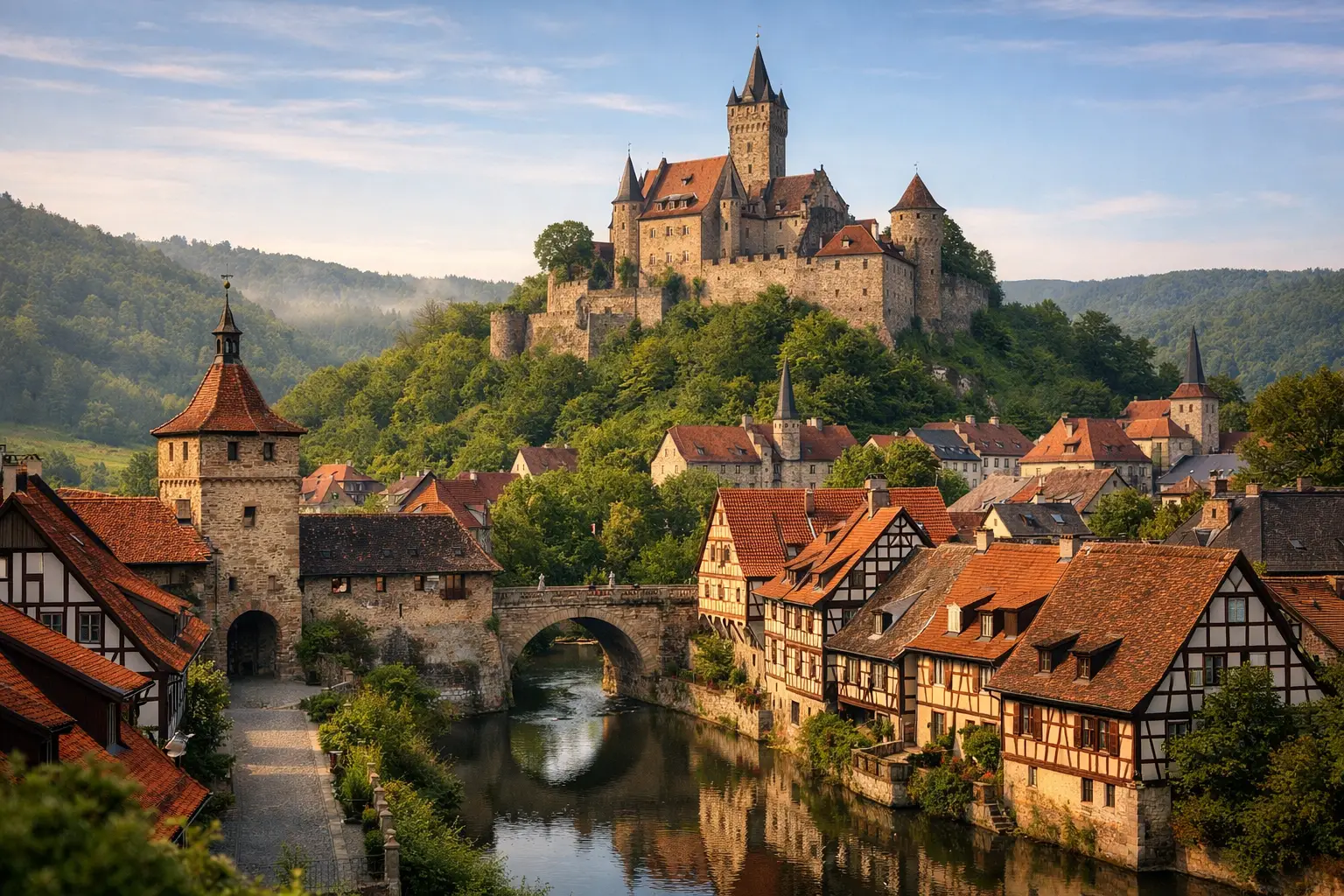
Some places in Germany make their case all at once. You step off a train, look up, and there it is - a fortress on a ridge, a palace above red roofs, a medieval wall still shaping the streets below. Castle towns in Germany have that kind of instant clarity. They are not just places with a landmark attached. The castle often still sets the scale, the mood, and even the daily rhythm of the town around it.
That is what makes them so satisfying for travelers who want more than a quick photo stop. In Germany, a castle town is rarely a stage set. It is usually a working place with bakeries, schoolyards, wine taverns, river promenades, and neighborhoods that developed in the shadow of aristocratic power long before tourism arrived. The appeal lies in that overlap between spectacle and ordinary life.
What makes castle towns in Germany so compelling
Germany has no shortage of castles, but not every castle creates a memorable town. The most rewarding places are the ones where the architecture and the settlement still speak to each other. A hilltop ruin may be dramatic, but a town where the market square, church tower, old gate, and castle approach still form a coherent whole tends to linger longer in the memory.
There is also real variety within the theme. Some towns are defined by defensive castles built above rivers or trade routes. Others grew around princely residences that feel more courtly than military. Some are tightly preserved and compact, while others have absorbed modern life more loosely, with the castle now acting as a visual anchor rather than the center of power. That variation matters if you are building an itinerary. A romantic Rhine stop, a Franconian old town, and a palace town in Baden-Wurttemberg can all fit under the same headline while offering very different experiences.
The river-and-rampart mood of the Rhine
If your mental picture of castle towns in Germany includes vineyards, steep slopes, and stone keeps watching over a river bend, the Rhine is where that image sharpens. Towns here often feel theatrically placed, but the history behind them is practical. Control the river, collect tolls, protect trade, and project status - that was the logic.
Bacharach captures this mood beautifully. Its old town remains compact and walkable, with half-timbered houses, fragments of medieval fortification, and a setting that feels almost too neatly composed to be real. The nearby Stahleck Castle, now adapted to modern use, still dominates the view above the town. Bacharach works especially well for travelers who want atmosphere over scale. It is not a place of endless sights. It is a place to notice how the castle, river, and town still belong to one landscape.
Marksburg, above Braubach, offers a different kind of pleasure because the castle itself is unusually intact. That changes the tone of the town below. Braubach feels less polished than some Rhine favorites, and that is part of its charm. It gives you a stronger sense of a small place that happens to live beneath an exceptional fortress, rather than a town arranged for visitors first.
There is a trade-off on the Rhine, though. The scenery is so famous that some travelers arrive expecting a purely tranquil, storybook setting. In reality, this is also a lived and traveled corridor. Depending on where you go and when, the river can feel busy. The best approach is to embrace the region as cultural landscape rather than fantasy backdrop.
Heidelberg and the art of the grand ruin
Few towns show the emotional pull of a castle better than Heidelberg. The ruined castle above the Neckar is not simply a monument attached to a charming university city. It shapes the identity of the whole place. Seen from below, the red sandstone walls seem to hover between permanence and loss, which is one reason Heidelberg has carried such romantic force for centuries.
The town beneath it is equally important. Heidelberg’s old center has enough elegance, density, and urban life to keep the castle from feeling isolated. You can spend the morning in the Altstadt, climb or ride up to the castle, and then see the town again from above as a tightly gathered pattern of roofs, church spires, and river crossings. That shift in perspective is part of the experience.
For some travelers, Heidelberg may feel less like a hidden discovery and more like a classic. That is fair. But it earns its reputation because the relationship between castle and town is unusually complete. If you are interested in how German castle towns can blend historic drama with contemporary cultural life, Heidelberg remains one of the clearest examples.
Franconia’s more intimate castle towns
Franconia, especially in northern Bavaria, offers a different register. Here the appeal is often less about spectacle and more about texture - quieter streets, layered civic architecture, and castles that feel integrated into old urban forms rather than simply perched above them.
Burghausen sits at one edge of this conversation and deserves more attention than it usually gets from US travelers. Its castle is often noted for its extraordinary length, stretching along a ridge high above the Salzach River. What makes the destination memorable, though, is the contrast between that commanding fortification and the graceful lower town. The old center below is elegant without feeling overworked, and the whole place has a long, linear drama that is unlike the more vertical Rhine towns.
Harburg, on the Romantic Road, is smaller and more contained. The castle rises directly above the Wornitz River and the compact historic settlement, creating one of those views that seem to explain medieval geography in a single glance. This is a good stop for travelers who value proportion and coherence. You can read the town quickly, but not superficially. The river crossing, the clustered houses, and the castle above still make immediate historical sense.
Palace towns are part of the story too
When Americans think of castles, they often imagine battlements and towers first. In Germany, though, some of the most interesting castle towns are shaped by palaces and princely residences rather than military strongholds. That shift changes the mood from defensive to ceremonial.
Schwerin is a strong example. Its palace, set amid lakes and gardens, has a theatrical beauty that feels almost implausible when first seen from across the water. Yet Schwerin is not only about the building itself. The city has a calm northern character, and the palace sits within a wider ensemble of water, formal landscaping, government functions, and everyday urban life. It is a reminder that castle culture in Germany is not one single medieval story.
Weimar also belongs in this broader conversation, even if people come first for literature, music, and classicism. The former ducal residence helps explain why the town developed the way it did. For travelers interested in culture as much as architecture, palace towns can be more rewarding than purely defensive castle sites because they reveal how power moved from fortification to display.
How to choose the right castle town for your trip
The right destination depends on what you want the castle to do. If you want cinematic landscapes and a clear medieval silhouette, the Rhine is hard to beat. If you want a famous town where the castle deepens an already rich urban experience, Heidelberg stands out. If you prefer quieter places where the historic fabric feels more intimate, Franconia is often the better fit. If you are drawn to pageantry, gardens, and the legacy of courts, palace towns like Schwerin offer a different lens entirely.
Season matters too. In high summer, castle towns can feel festive and lively, but also busier. In shoulder season, especially early fall, they often show more texture. Vineyards turn, river light softens, and the towns feel less performative. Winter can be beautiful in places with strong architectural cores, though some castle visits may be more limited, and the appeal becomes more atmospheric than panoramic.
It also helps to think in terms of pacing. Castle towns are best when they are allowed to unfold slowly. Arrive in the morning, stay through changing light, and give yourself time to move between elevated views and street-level details. The magic is not only in seeing the castle. It is in noticing how a market square sits below it, how a church tower answers it, how a lane bends because a wall once stood there.
A good castle town leaves you with more than images of stone and height. It gives you a sharper sense of how German places were formed - by defense, status, trade, faith, and the long habit of building daily life in the presence of power. That is why these towns reward the detour. They do not just preserve history. They let you walk inside its old framework, then find a very present-day town still living there.