Blog
8 Day Trips From Berlin by Train
Published July 6, 2026
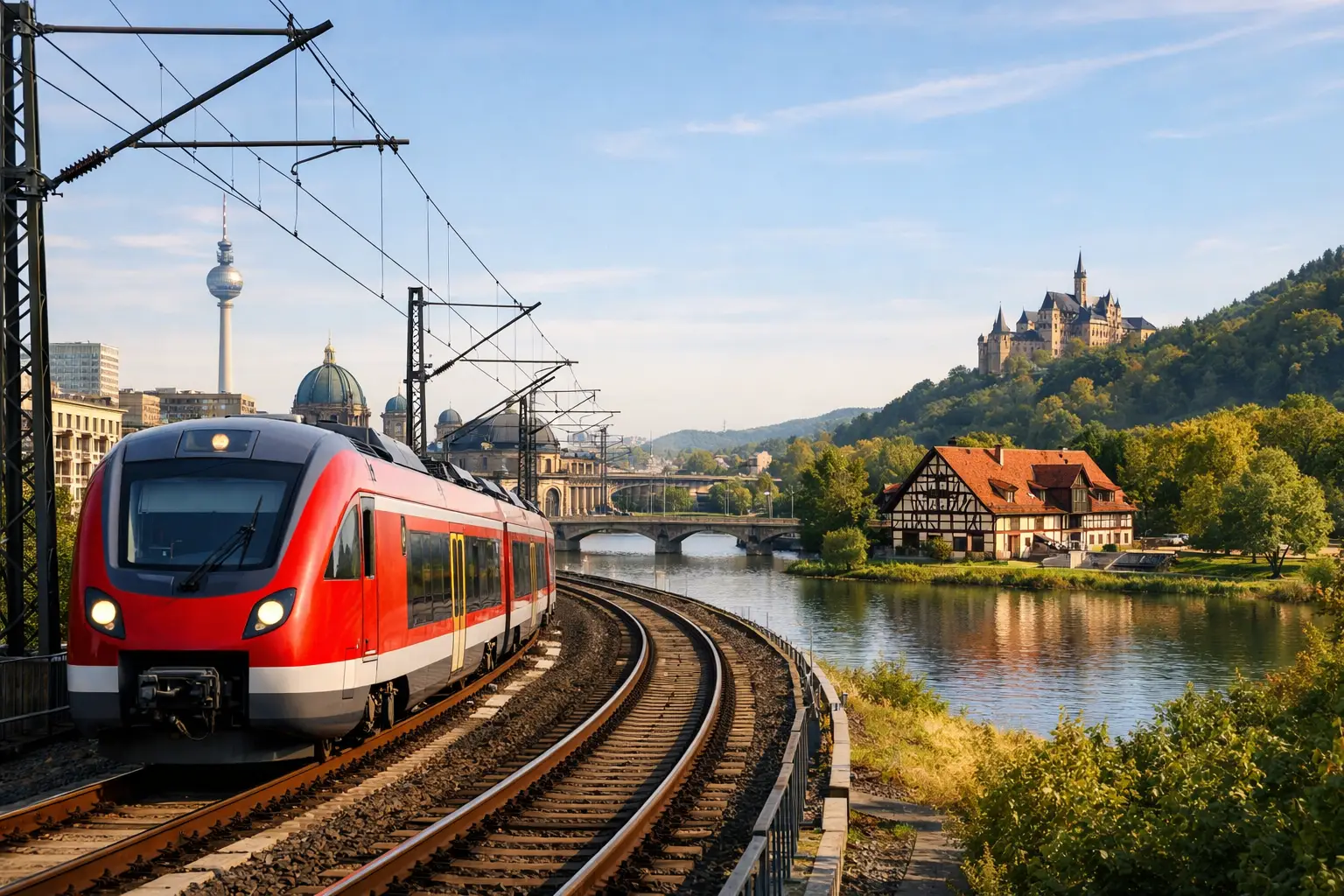
Berlin can feel infinite until you want a change of rhythm. That is when day trips from Berlin by train become one of the city’s great pleasures - not as a checklist of nearby stops, but as a way to see how quickly Germany’s mood can shift from imperial grandeur to river landscapes, spa-town calm, or brick-built northern character.
What makes the rail option especially appealing is not just convenience. It is the way the journey itself becomes part of the day. Suburbs loosen into forests, lakes appear where you were expecting fields, and station platforms deliver you straight into places with a very different texture from the capital. For travelers based in Berlin, the right day trip is less about distance than atmosphere.
How to choose day trips from Berlin by train
The best choice depends on what kind of contrast you want. If Berlin has been all museums, nightlife, and long walks through dense neighborhoods, Potsdam offers elegance and gardens. If you want a more dramatic historical atmosphere, Lutherstadt Wittenberg or Dresden can feel richer in narrative. If your trip needs water, fresh air, and a gentler pace, destinations in the Spreewald or on the Baltic side can be more restorative than ambitious.
There is also a practical trade-off. Some places are ideal for a relaxed half-day with lunch and one major sight. Others justify an early start and a full schedule. Train routes from Berlin are generally strong, but station-to-center convenience varies. A town may be easy to reach yet require a bit of orientation once you arrive, while another places you almost immediately inside its historic core.
Potsdam for palaces, gardens, and Prussian ease
Potsdam is the classic answer, but it earns that status. It does not feel like an afterthought to Berlin. It feels like a companion city, shaped by the Prussian court, layered with villas, lakes, formal parks, and a slightly softer urban temperament.
A day here can be as grand or as casual as you want. Some travelers go straight for Sanssouci and stay in the orbit of palaces and terraces. Others wander the Dutch Quarter, cross elegant residential streets, and let the city reveal itself more gradually. That second approach often suits Potsdam best. Its appeal is not only in headline landmarks, but in the composed, almost leisurely way the city holds architecture, landscape, and history together.
If you are traveling in warmer months, this is one of the most rewarding day trips from Berlin by train because the green setting does so much of the work. Even when the palaces are busy, the wider city still feels spacious.
Lutherstadt Wittenberg for Reformation history that still feels immediate
Wittenberg has the advantage of clarity. You arrive knowing why it matters, yet the place rarely feels trapped inside a single story. Yes, this is the town most associated with Martin Luther and the Reformation, but it also works as a coherent historic destination with a walkable center, handsome facades, and a sense of intellectual weight that lingers in the streets.
For American visitors, Wittenberg can be especially compelling because the history is so familiar in outline and so different in setting. Seeing the church, the university legacy, and the townscape together makes the subject less abstract. This is not history presented in isolation. It is history embedded in daily urban form.
The scale helps. You can cover a lot without rushing, which makes Wittenberg a good option if you want substance without logistical complexity. It is one of those places where a simple walk between major sites tells the story well.
Spreewald for waterways and a quieter Brandenburg landscape
Some Berlin day trips are about architecture. The Spreewald is about atmosphere. This low-lying network of waterways, meadows, and villages offers a different idea of northeastern Germany - less monumental, more elemental. Depending on where you base your outing, you may find traditional boat traffic, shaded canals, and a pace that seems deliberately resistant to city habits.
Lübbenau is often the most practical rail gateway, but the broader point is not one town alone. It is the landscape experience. If your Berlin itinerary has been culturally dense, a Spreewald day can reset it. Bring patience rather than a packed agenda. The reward is not in seeing many things quickly, but in watching the region unfold at water level or on foot.
This trip works best when expectations are aligned with the season. In spring and summer, the greenery and boating culture are central to the appeal. In colder months, it can still be beautiful, but it becomes more contemplative than idyllic.
Dresden for a fuller city escape
Dresden pushes the limits of what some travelers consider a day trip, yet it remains one of the most satisfying rail journeys from Berlin if you want a destination with real depth. It has the visual drama of a major historic city, especially along the Elbe, but it also offers the layered identity of a place rebuilt, argued over, and continuously reimagined.
The first impression is often architectural. The restored baroque core has a theatrical quality, and the skyline is one of the most recognizable in Germany. Still, Dresden is more interesting when you let the city be larger than its postcard views. Cross the river. Spend time in Neustadt. Notice how courtly grandeur and contemporary urban life sit side by side rather than neatly blending.
A Dresden day trip is best for travelers comfortable making choices. You will not see everything. That is fine. Pick one museum or major church, give the riverfront time, and leave room for neighborhoods rather than only monuments.
Stralsund for Hanseatic character and a taste of the Baltic world
If Berlin has put you in the mood for the north, Stralsund is a strong and slightly less expected answer. The city carries the red-brick confidence of the Hanseatic world, and its historic center has a maritime seriousness that feels quite distinct from inland Brandenburg or Saxony.
This is a place for travelers who enjoy urban texture as much as major attractions. The churches, gabled houses, and old civic buildings create a sense of continuity, while the water keeps the city open and wind-touched. Even without going farther onto the coast, you get a genuine Baltic-edge feeling here.
Because it is farther out, Stralsund suits those willing to dedicate the day to the journey as much as the destination. The payoff is difference. It does not feel like Berlin’s outskirts. It feels like another regional chapter entirely.
Brandenburg an der Havel for a softer historic city
Brandenburg an der Havel is often overlooked in favor of more obvious names, which is precisely why it works so well. It offers medieval churches, waterways, and a quiet dignity without the polished performance of a heavily touristed city. For readers who prefer texture over spectacle, it can be one of the most rewarding nearby choices.
The city unfolds across islands and river branches, and that geography gives it a calm, dispersed quality. You walk, cross bridges, and keep encountering brick, towers, and small views of water. There is history here, certainly, but also a lived-in normalcy that makes the place more appealing, not less.
This is a strong choice when you want a day that feels exploratory rather than programmed. It may not have one overpowering sight, yet the overall impression can stay with you longer.
Schwerin for a fairy-tale silhouette with substance
Schwerin’s castle is the image that draws people in, and it is a striking one. Rising from its lake setting, it has the kind of romantic silhouette that can look almost too perfect from afar. But Schwerin is more than the castle photo. The city around it is compact, gracious, and shaped by water in a way that gives the whole day a relaxed elegance.
It is an especially appealing trip for travelers who want beauty without excessive scale. You can admire the palace setting, wander the old town, and enjoy the lakeside atmosphere without feeling as if you are racing across a major city. The trade-off is that Schwerin is less intense than Dresden and less instantly famous than Potsdam. For many readers, that is the attraction.
Leipzig for culture, music, and a livelier urban counterpoint
Leipzig makes sense if what you want is not escape from city life, but a different version of it. Compared with Berlin, it can feel more compact, more classically composed, and in some areas more musically and intellectually framed. Bach, trade-fair history, East German memory, and a strong contemporary cultural scene all meet here.
This is not the trip for pastoral calm. It is for travelers who want another urban conversation - one with arcades, churches, coffeehouse traditions, and neighborhoods that reward a bit of wandering. Leipzig also works well in cooler or less predictable weather because so much of its charm lies in interiors, passages, and museum-rich streets.
If Berlin has felt sprawling, Leipzig can be pleasantly legible. You get energy and substance, but in a city that reveals itself quickly.
A few practical notes before you go
For train-based day trips, flexibility matters. Schedules can shift, and the smartest plan is usually to choose one or two priorities rather than build the day around tight assumptions. Regional routes are excellent for spontaneity, while longer intercity journeys benefit from an earlier start and a bit more structure.
It is also worth thinking about walking tolerance. Many of these destinations are best experienced on foot once you arrive, and the difference between a good and frustrating day can be as simple as leaving enough time to stroll rather than race between sights.
Berlin is one of Europe’s great base cities not just because of what it contains, but because of what it releases you into. Step onto the right train, and the capital gives way to palace gardens, Reformation streets, tidal winds, or lake-framed silhouettes before the day is out. Choose the place that answers your mood, and the journey will feel less like an excursion than a change of perspective.