Blog
German Culture and History for Travelers
Published June 24, 2026
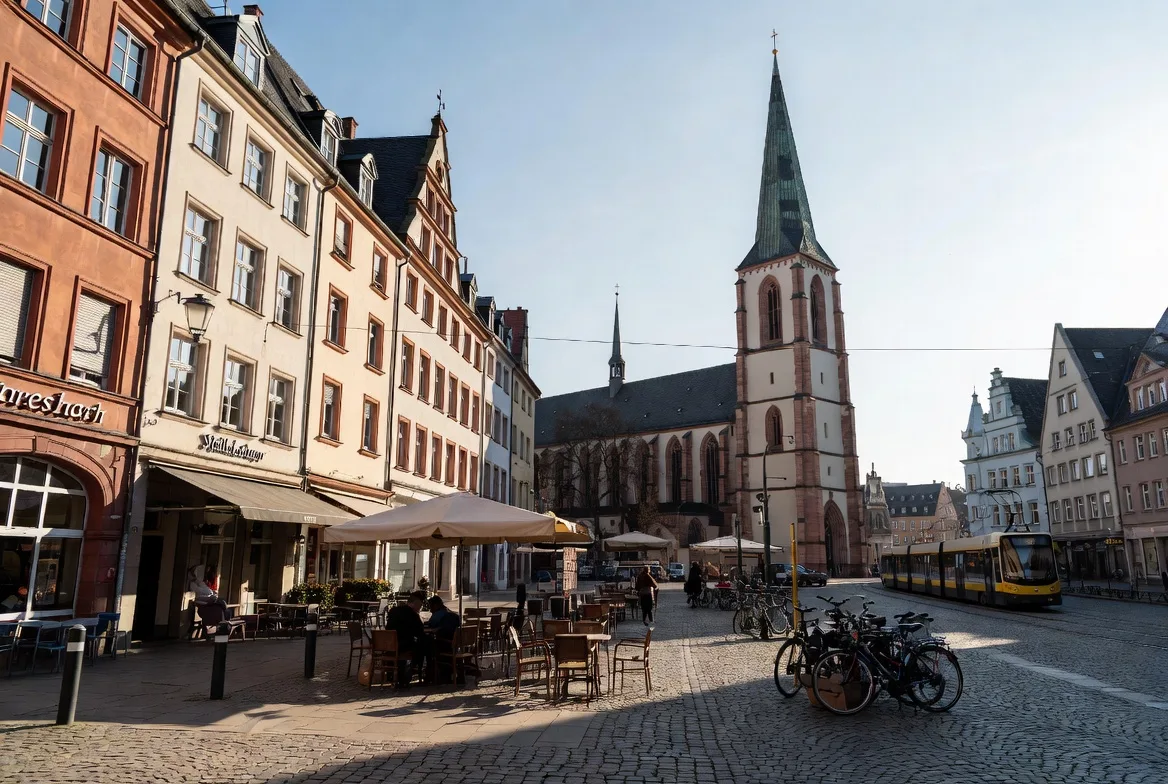
You can feel german culture and history before you ever enter a museum. It is there in the weight of a market square paved with worn stone, in the sharp silhouette of a Gothic church above a riverbank, and in the matter-of-fact efficiency of a morning train slipping past vineyards, factories, and allotment gardens. For travelers, Germany is not a country that reveals itself through one grand monument alone. It is a place where the past keeps company with daily life.
That is part of what makes traveling here so satisfying. Germany rarely presents history as a finished display case. Instead, it appears in layers - Roman foundations beneath modern streets, princely residences near postwar architecture, and old regional customs surviving comfortably alongside cutting-edge design and global cities. If you want to understand the country beyond a checklist of famous sights, culture and history are the real route in.
Why german culture and history feel so present
Germany's story is unusually visible because the country was shaped less by one continuous centralized tradition and more by regions, kingdoms, free cities, religious divides, and shifting borders. That means local identity still matters. Bavaria does not feel like the Baltic coast. Saxony carries a different historical mood from the Rhineland. Even food, architecture, dialect, and festival culture can change noticeably from one part of the country to another.
For travelers, this regional character is a gift. It turns a broad national subject into something tangible. You do not need to read a long academic timeline to sense how Germany developed. You can see it in brick Gothic towns in the north, Baroque church interiors in the south, spa architecture in old resort communities, and industrial landscapes that speak to the country's modern economic power.
There is also a distinctly German relationship with preservation. Historic districts, castles, archives, memorial sites, and museums are often interpreted with rigor rather than nostalgia alone. Beauty matters, but context matters too. A reconstructed old town square may sit not far from a memorial reminding visitors what was lost, destroyed, or deliberately confronted in the 20th century. That honesty gives travel here unusual depth.
From fragmented states to a modern nation
One reason Germany can seem complex is that the modern nation is relatively young. For centuries, the lands we now call Germany were part of the Holy Roman Empire, a loose and often bewildering political arrangement of duchies, bishoprics, principalities, and free imperial cities. That patchwork left behind one of the country's greatest travel pleasures: a dense concentration of places with strong local identity and remarkable architectural heritage.
Medieval prosperity shaped many of these towns. Trade routes enriched merchant cities, guild halls rose beside churches, and fortified walls marked civic ambition as much as military caution. In some places, that world still feels close at hand. You walk through a historic center and begin to understand that Germany's story was built town by town, not just capital by capital.
The 19th century brought a major shift. Industrialization accelerated, railways expanded, and political unification under Prussian leadership in 1871 created the German Empire. This is when many of the grand train stations, civic buildings, and broad boulevards travelers still encounter took shape. Yet even with unification, regional loyalties did not disappear. Germany became a nation without becoming culturally uniform.
That tension between unity and regionalism remains one of its most interesting features. It explains why local traditions feel strong, why state capitals carry distinct personalities, and why a traveler moving across the country can experience real variation rather than a single national script.
The weight of the 20th century
No serious look at German culture and history can avoid the 20th century, and travelers should not want it sanitized. The Nazi era, World War II, the Holocaust, the destruction of cities, the division between East and West Germany, and the eventual reunification are central to understanding the country as it is now.
What stands out when traveling in Germany is not only the magnitude of this history, but the way it is addressed. Memorial culture is woven into everyday landscapes. A former parade ground, a preserved prison, a subtle plaque on a residential street, or brass stumbling stones set into the pavement can all become moments of encounter. The country asks visitors to look directly at difficult chapters, not skirt around them.
That can make travel more emotionally demanding than in places where the past is polished into postcard form. It can also make it more meaningful. Germany's contemporary democratic identity, its civic culture, and much of its seriousness about public memory are inseparable from this reckoning.
East and West still matter too, although not always in obvious ways. In some eastern cities, travelers notice different urban planning, different architectural rhythms, or a sharper sense of reinvention after reunification. In western regions, postwar rebuilding often produced another set of contrasts between restored old quarters and pragmatic modern structures. Neither is more "authentic" than the other. Both tell the story.
Culture is not just heritage - it is lived rhythm
Travelers sometimes approach culture as if it lives only in palaces, museums, and concert halls. Germany certainly excels in those settings. This is a country of extraordinary musical heritage, literary achievement, philosophy, craftsmanship, and design. Bach, Beethoven, Goethe, Schiller, the Bauhaus movement, and a long tradition of engineering excellence still shape the way places are presented and understood.
But culture also lives in habits and public life. It is there in the seriousness given to bread, pastries, seasonal produce, and regional wine. It appears in the social architecture of beer gardens and Christmas markets, in the quiet order of a Sunday, and in the way hiking trails, river promenades, and urban parks are folded into everyday recreation rather than treated as a luxury.
This is where Germany can pleasantly surprise American travelers. The country often feels highly organized, but not necessarily stiff. Standards are valued, public space is often respected, and routines can seem formal at first. Yet once you settle into the rhythm, there is warmth in that structure. A local festival, an outdoor cafe on a square, or a neighborhood market often reveals a sociable and relaxed side that guidebook stereotypes miss.
Architecture as a shortcut to understanding place
If you want one practical way to read Germany well, pay attention to buildings. Architecture here is less a backdrop than a historical text.
Romanesque churches point to early medieval power and religious networks. Gothic cathedrals and Hanseatic brick architecture speak to urban wealth and northern trade. Renaissance town halls, Baroque palaces, and neoclassical theaters tell stories of courts, ambition, and artistic patronage. Then the 20th century introduces everything from Bauhaus clarity to socialist planning blocks and postwar reconstruction.
The trade-off is that Germany is not always visually continuous in the way some travelers expect from Europe. War damage and rebuilding changed countless cityscapes. You may find a beautiful old square interrupted by a plain 1950s facade, or a medieval street opening onto stark modernist structures. Rather than seeing that as a flaw, it helps to understand it as one of the country's defining visual truths. Germany often looks like a place that has had to rebuild itself, because it has.
Regional traditions still shape the journey
Part of the pleasure of traveling through Germany is noticing how traditions remain local rather than flattened into a generic national brand. In wine regions, landscapes and cuisine are tied closely to centuries of cultivation. In Protestant areas, church interiors and civic culture often differ in mood from Catholic regions known for pilgrimage churches and more exuberant festival calendars. Along the coast, maritime identity changes the architecture, food, and pace of life. In upland and alpine areas, craft traditions and seasonal customs feel different again.
This does not mean every region is frozen in time. Germany is modern, urban, and internationally connected. But older patterns still shape what visitors experience. That is why a small town festival, a spa promenade, a local museum, or even the style of a bakery window can feel so rooted in place.
For readers of Travel Germany, this is where the country becomes especially rewarding. The most memorable experiences often come not from seeing more, but from seeing context more clearly.
How to experience Germany with more depth
A richer trip usually comes from adjusting your pace. Spend time in city museums with strong local collections, not only major national institutions. Visit churches even if you are not usually interested in religious art. Walk residential streets near historic centers. Sit in a market square long enough to notice who actually uses it. Let regional food tell part of the story.
It also helps to approach German history with a little tolerance for complexity. Some places are immediately charming. Others need interpretation before they become compelling. An industrial district, a rebuilt center, or a memorial site may not offer instant postcard appeal, but they often reveal more about the country than a perfectly preserved facade ever could.
That balance - beauty paired with seriousness, local pride paired with historical self-awareness, tradition paired with reinvention - is what makes Germany so absorbing to travel through. You are not just moving between destinations. You are moving through a landscape that has argued with its own past and kept many of its regional voices intact.
The best approach is simple: travel with curiosity, and let each place explain its own version of Germany to you.