Blog
8 Germany Scenic Train Routes Worth Riding
Published June 30, 2026
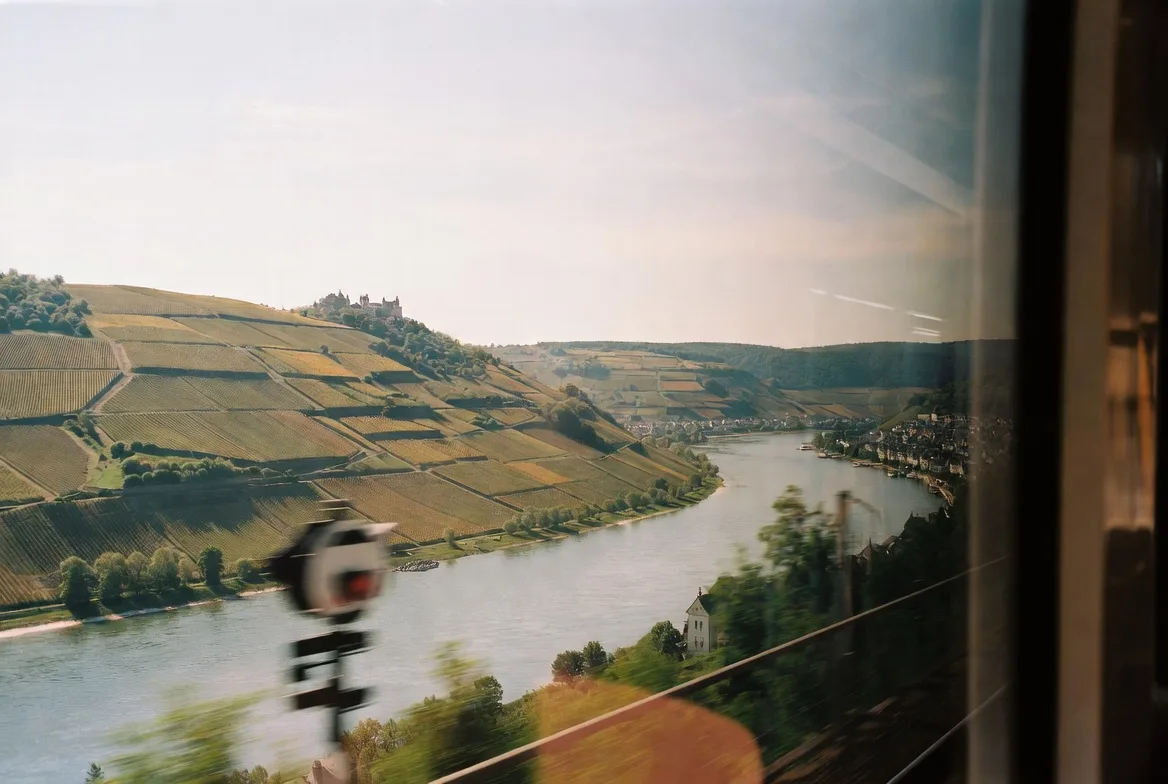
Few travel moments in Germany feel as quietly satisfying as watching a river bend past vineyard terraces while the train glides on without fuss. The appeal of germany scenic train routes is not simply that they are pretty. It is that rail travel here often places you inside the landscape rather than rushing above or around it, letting castles, church spires, harbor cranes, and forested hills arrive in sequence like chapters.
For travelers coming from the US, where train journeys are often treated as either a necessity or a novelty, Germany offers something more integrated. The rail network is practical, yes, but some routes are memorable in a distinctly editorial sense. They reveal how geography shapes regional identity - why one stretch feels wine-soaked and Romanesque, another maritime and wind-brushed, and another almost Alpine in mood.
The most rewarding approach is not to think in terms of ticking off one famous line. Germany’s scenic rail travel works best as a set of regional moods. Some rides are grand and cinematic. Others are subtle, improving if you sit still, look out the window, and notice how villages, industry, and old landscapes still coexist.
What makes germany scenic train routes special
Germany is not scenic in one single way. That is the first useful correction for anyone expecting only fairy-tale mountains. Some routes are shaped by rivers, especially where tracks run close to the water and towns gather beneath castles or vineyard slopes. Others are scenic because of cultural texture - brick Gothic skylines in the north, spa-town elegance in wooded uplands, or little stations that seem to belong to another decade.
There is also a practical advantage. Many of the country’s most beautiful rail stretches are not isolated heritage rides. They are part of ordinary regional or long-distance networks, which means you can fold them naturally into a broader trip. That convenience does come with a trade-off. A famous route may also be a useful commuter or intercity corridor, so the atmosphere depends on time of day, season, and where you sit.
The Rhine Valley between Mainz and Koblenz
If one route regularly earns its reputation, it is the Middle Rhine stretch between Mainz and Koblenz. This is the Germany many travelers imagine before they arrive: steep vineyards, castle silhouettes, river traffic, and compact towns gathered along the banks. The train runs close enough to the Rhine that the landscape feels immediate rather than distant.
What makes this ride work so well is density. The scenery changes constantly, but never so quickly that it becomes abstract. You can follow church towers into one town, then see a ruined fortress above the next curve, then catch a glimpse of terraces climbing the hillsides. On a gray day it feels romantic and slightly severe. In sunshine it turns almost theatrical.
It is also one of the easiest scenic rides to pair with overnight stops. Rather than treating it as a single corridor to pass through, many travelers will find more pleasure in breaking the journey in one of the small river towns and continuing the next day.
The Moselle line through wine country
The Moselle has a softer rhythm than the Rhine. The valley feels narrower, more intimate, and often more quietly beautiful. Along stretches between Koblenz and Trier, trains move through a landscape of looping river views, vine-covered slopes, and villages whose church steeples and pastel facades seem settled into the terrain rather than displayed for effect.
This route is especially appealing if you prefer scenery with a sense of local life still attached to it. The Moselle is not just dramatic; it is cultivated. You feel the long relationship between river, agriculture, and settlement. In late summer and early fall, that impression becomes stronger, when the vineyards lend the valley a textured, lived-in richness.
Compared with the Rhine, the Moselle may feel less iconic at first glance. For some travelers, that is exactly the point.
The Elbe Valley from Dresden into Saxon landscapes
One of Germany’s most elegant rail journeys begins in Dresden and follows the Elbe into the surrounding Saxon countryside. The city itself sets the tone with its Baroque skyline and broad river setting, but the appeal deepens as the route moves outward toward sandstone formations, hillside villas, orchard country, and old river communities.
This is a scenic line for travelers who care as much about cultural framing as raw landscape. The beauty here comes from composition - architecture, river light, wooded slopes, and the persistent sense that Saxony has long understood how to make a landscape inhabited without flattening its character.
Depending on how far you continue, the journey can become more dramatic near the Saxon Switzerland area, where the sandstone scenery gains presence. Even if you do not press deep into the region, the route out of Dresden is a reminder that some of Germany’s finest rail views are shaped by artistic and historical layers as much as by wilderness.
The Black Forest Railway
The Black Forest carries a strong name, but the railway experience is less about folklore than engineering and atmosphere. The classic route across the region, associated with the line between Offenburg and Singen, threads through wooded heights, valleys, and tunnels in a way that feels distinctly nineteenth-century in conception yet still deeply satisfying now.
This is not the broad, panoramic spectacle some travelers expect from mountain rail travel. It is moodier than that. Forests close in, villages appear unexpectedly, and the line’s curves and gradients create a steady sense of movement through difficult terrain. When mist hangs in the trees, it can feel almost cinematic. On bright days, the small clearings and station towns soften the journey.
The trade-off is that this scenery unfolds gradually. If you crave immediate big-ticket views, another route may impress more quickly. If you like atmosphere and a strong sense of regional character, the Black Forest line rewards patience.
The Allgau route toward the Alpine edge
Southern Bavaria offers some of the most inviting rail scenery in the country, especially on routes crossing the Allgau toward the Alpine foothills. Here the pleasure lies in transition. The land opens into meadows, church domes punctuate villages, lakes flash into view, and then the mountains begin to assert themselves at the horizon.
For US travelers, this is often the Germany of painted farmhouses, tidy fields, and dramatic southern light. Yet it would be a mistake to treat it as purely pastoral. The Allgau has structure and working life, and the best train journeys here preserve that balance. You get beauty without the feeling of entering a stage set.
This region is particularly strong in shoulder seasons. Spring can be vividly green, while fall often brings clear air that sharpens the Alpine backdrop.
Hamburg to Sylt for North Sea drama
Not every scenic route in Germany depends on mountains or castles. The line from Hamburg north toward Sylt shifts the mood entirely. It begins in one of the country’s great maritime cities and moves into flatter, wind-shaped country where the beauty is horizontal, spare, and increasingly coastal.
The approach to Sylt is the memorable part. As the train crosses the Hindenburgdamm causeway, sea and sky dominate, and the sensation is unlike the enclosed river valleys of the south and west. It feels exposed, northern, and a little elemental.
This route suits travelers who appreciate landscape with restraint. There is less ornamental drama here, but a stronger feeling of weather, horizon, and regional identity. It is Germany in a different register.
The Baltic coast routes around Rostock and Stralsund
Northern Germany’s Baltic rail journeys are often overlooked by travelers focused on Bavaria or the Rhine, which is part of their charm. Around Rostock and Stralsund, scenic train travel is less about one single blockbuster segment and more about a series of coastal impressions - marshes, inlets, old Hanseatic skylines, harbor edges, and flat light over water.
What stands out is the meeting of rail and maritime culture. Church towers rise above brick towns, seabirds trace the shoreline, and the landscape feels broad and open even when the scenery is understated. For travelers interested in Germany beyond its most familiar imagery, these northern routes offer a compelling alternative.
They also pair well with slower itineraries. Rather than racing through, it makes sense to stop, walk a harbor, and continue on another local train when the mood returns.
Bavaria’s lake country lines
Some of the most pleasurable rides in southern Germany are not the most famous. Regional lines through Bavaria’s lake country, especially those leading south from Munich into Upper Bavaria, can deliver a graceful blend of water, mountain views, church spires, and prosperous-looking villages.
The appeal here is proportion. Lakes catch the light, the Alps stay just distant enough to create tension, and the towns feel rooted rather than overly polished. On a clear day, these routes can be quietly addictive. You begin by looking up for the mountains, then notice how much the smaller details matter: boathouses, onion-domed churches, and local passengers carrying hiking boots or market bags.
How to choose the right scenic route
The best route depends on what kind of beauty holds your attention. If you want classic river drama, choose the Rhine. If you prefer a more intimate wine landscape, the Moselle may feel richer. For architectural framing and cultural depth, Saxony is hard to beat. For woodland atmosphere, look to the Black Forest. For open-country elegance and Alpine anticipation, southern Bavaria delivers.
It also helps to think about pace. Some rail corridors are best sampled in one sitting. Others deserve pauses in between. Scenic train travel in Germany is not only about what you see from the window. It is about knowing when to step off, stay the night, and let the route become part of a larger regional story.
A good train ride does more than move you through a landscape. It teaches you how that landscape fits together. In Germany, that may be the most memorable view of all.