Blog
Germany Train Travel Tips That Actually Help
Published June 28, 2026
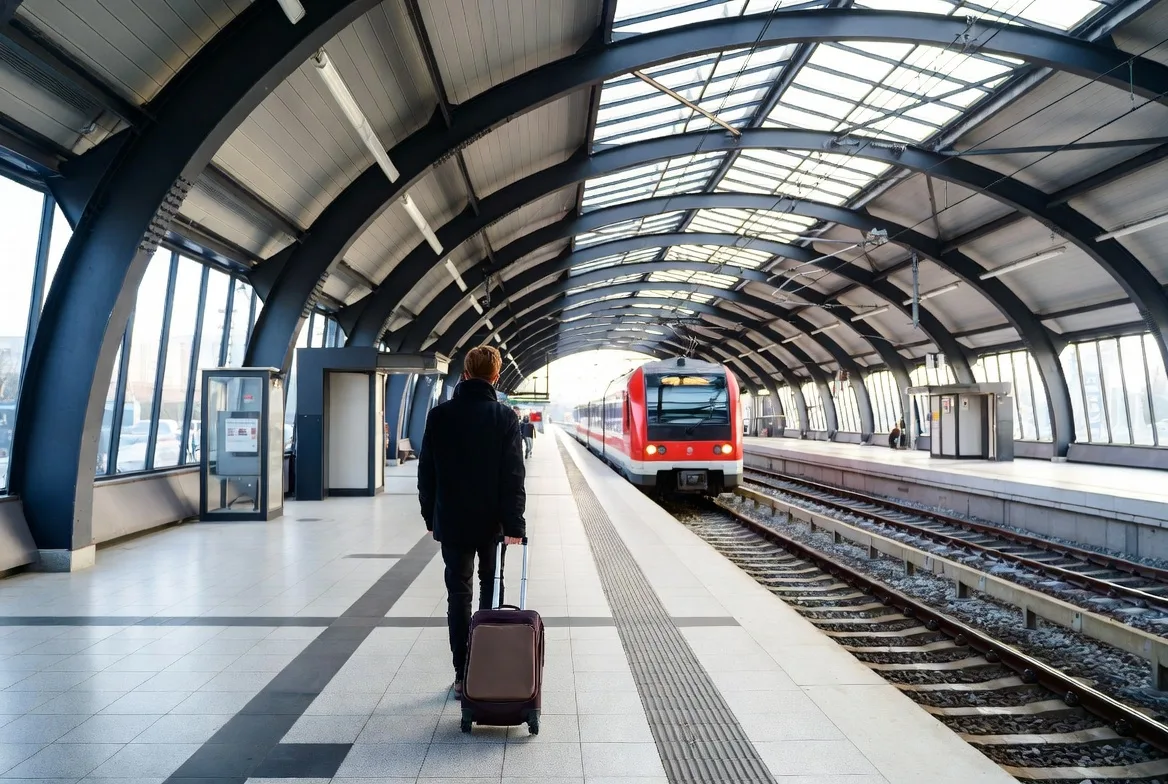
A first train journey in Germany often feels impressively orderly right up until the platform changes, the carriage numbers seem to make no sense, and everyone around you starts moving with quiet purpose. That is usually the moment when germany train travel tips become less of a nice extra and more of a survival skill. The good news is that German rail travel is not difficult so much as it is precise, and once you understand its rhythms, it becomes one of the most satisfying ways to see the country.
The real pleasure of traveling by rail here is not just efficiency. It is the way Germany reveals itself from a train window: vineyard slopes above a river, red-roofed towns gathered around a church tower, dense forests giving way to unexpectedly elegant stations. Trains are not only a way to get from Berlin to Munich or Frankfurt to Cologne. They are often the best vantage point for noticing how regional the country still feels.
Germany train travel tips for reading the system
One of the most useful shifts for US travelers is to stop thinking of trains as a single service and start thinking of them as layers. In Germany, long-distance trains and regional trains serve different purposes, and understanding that distinction clears up much of the confusion.
Long-distance services are typically the faster intercity options used for bigger hops between major destinations. Regional trains, by contrast, are slower, make more stops, and are often where the trip becomes more atmospheric. If you are heading into smaller towns, spa regions, wine country, or rural corners with half-timbered stations and compact platforms, regional trains are often the final and most memorable leg.
This matters because your ticket flexibility may depend on which kind of train you are using. Some fares are tied to a specific long-distance departure, while many regional tickets allow more freedom within a certain route or day. If your priority is spontaneity, regional travel can be refreshingly forgiving. If your priority is speed, the trade-off is usually less flexibility.
Another point that helps: stations frequently display departures by final destination, not just by the city you care about. If your train is going onward beyond your stop, you may need to look for the end point listed on the board. That small detail catches many visitors off guard, especially in larger stations where several departures may look similar at first glance.
How to make transfers feel less stressful
German stations can be beautifully straightforward or mildly bewildering, sometimes within the same trip. A transfer that looks simple on paper may involve changing platforms quickly, splitting train sections, or moving from a major station hall to a smaller regional platform tucked around a corner.
The best approach is to treat transfer time as part of your itinerary, not as dead space. If a connection feels tight, assume you will be walking briskly and paying attention. If you prefer a calmer pace, choose itineraries with a bit more margin. This is especially wise if you are carrying luggage, traveling with children, or arriving after a long-haul flight from the US when everything feels one beat slower.
Platform changes do happen. They are not a sign that something has gone terribly wrong. They are simply part of a live rail system. Check the departure board again when you arrive at the station and once more a few minutes before departure if you are unsure. In larger cities, do not assume the platform listed earlier in the day is still the one you will use.
Carriage numbering can also be unexpectedly important. On longer trains, different cars may stop near different platform sections marked with letters or numbers. If you have a reserved seat, it is worth finding your section before the train arrives. Otherwise, you may find yourself walking through crowded aisles with bags while the train is already moving, which is nobody's idea of a graceful entrance.
Tickets, reservations, and the flexibility question
Many travelers assume a train ticket automatically means a reserved seat. In Germany, that is not always the case. You can have a valid ticket and still need to find any unreserved seat available. On quieter regional routes, that is usually fine. On popular long-distance routes, weekends, and holiday periods, a seat reservation can make the journey much more comfortable.
That said, reservations are a convenience, not a universal necessity. If you are traveling light, going a short distance, or riding outside peak periods, you may be perfectly happy without one. This is one of those areas where it depends on your style. Some travelers value certainty. Others would rather keep plans loose and accept a little unpredictability.
Another useful habit is to read the terms of your fare rather than just the headline price. The cheapest options may come with strict conditions. More flexible tickets often cost more, but they can be worth it if your itinerary includes uncertain museum timings, weather-dependent detours, or a lingering lunch in a town you did not expect to like so much.
Germany train travel tips for regional journeys
If your image of German train travel is all sleek express service between major cities, you are only seeing part of the picture. Some of the most rewarding rail days happen on regional lines, where the tempo slows and the landscape becomes part of the experience.
Regional trains are particularly useful for travelers interested in Germany beyond the obvious urban circuit. They connect market towns, river valleys, university cities, spa districts, and smaller historic centers with a practicality that invites curiosity. You might board in a polished city station and, less than an hour later, step out into a place with a medieval street grid and hardly any international visitors in sight.
This is also where expectations matter. Regional trains may be simpler, less spacious, and occasionally busier with local commuters, cyclists, or school groups. Yet they often offer the kind of travel memory that sticks: watching church spires appear between fields, hearing station names that are new to you, or realizing that Germany's regional identities are not abstract at all but visible stop by stop.
If you are planning a day with multiple short regional hops, keep your schedule slightly open. The joy of this kind of travel lies in allowing room for what catches your eye, whether that is a station in a wine town, a riverside promenade, or a café-filled square just beyond the tracks.
Practical habits that make a big difference
Pack for platforms, not just destinations. A rolling suitcase is fine, but Germany still has stations with stairs, older underpasses, and platform stretches longer than they first appear. If you can manage your own luggage easily, the whole system becomes far more pleasant.
Arrive earlier than you think you need to, especially for your first few departures. Ten or fifteen extra minutes can mean the difference between feeling flustered and feeling observant. It gives you time to read signs, locate your platform section, and notice whether your train divides en route.
Keep an eye on the quiet car if you prefer a calmer ride. Many German travelers take this expectation seriously, and it can be a welcome refuge on longer trips. On the other hand, if you are traveling with lively children or plan to talk freely, a regular car is the kinder choice.
Food is another small but worthwhile consideration. Some long-distance trains may offer onboard service, but not always in the way travelers expect, and regional trains are a different matter entirely. Bringing water and a snack is a simple habit that prevents unnecessary stress, especially on multi-leg days.
Finally, stay attentive to station names. In larger urban areas, several stations may share a city name with different suffixes, and smaller stops can sound surprisingly similar if you are tired. A quick check before departure saves a lot of second-guessing later.
The cultural rhythm of train travel in Germany
Part of traveling well by train in Germany is accepting that the system reflects local habits as much as timetables. People tend to board with purpose, keep aisle movement efficient, and settle in quickly. It is not unfriendly. It is simply organized in a way that rewards awareness.
For American travelers, that can feel brisk at first, but it soon becomes liberating. Once you understand the cues, rail travel here offers a rare combination of independence and ease. You are free to cross the country, pause in smaller places, and watch the landscape shift from industrial edge to castle-dotted riverbank to alpine foothill, often in a single journey.
The most useful germany train travel tips are not really about gaming the system. They are about learning how to move with it. Read the boards carefully, leave room for transfers, know the difference between speed and flexibility, and let regional lines do some of the storytelling. Germany is exceptionally good by train, but even better when you stop treating the ride as mere transit and start seeing it as part of the country itself.
If you leave a little space in your plans for the unexpected platform, the extra stop, or the town that looks intriguing from the station square, the railway will do more than get you around - it will quietly improve the trip.