Blog
How to Travel Around Germany Easily
Published June 29, 2026
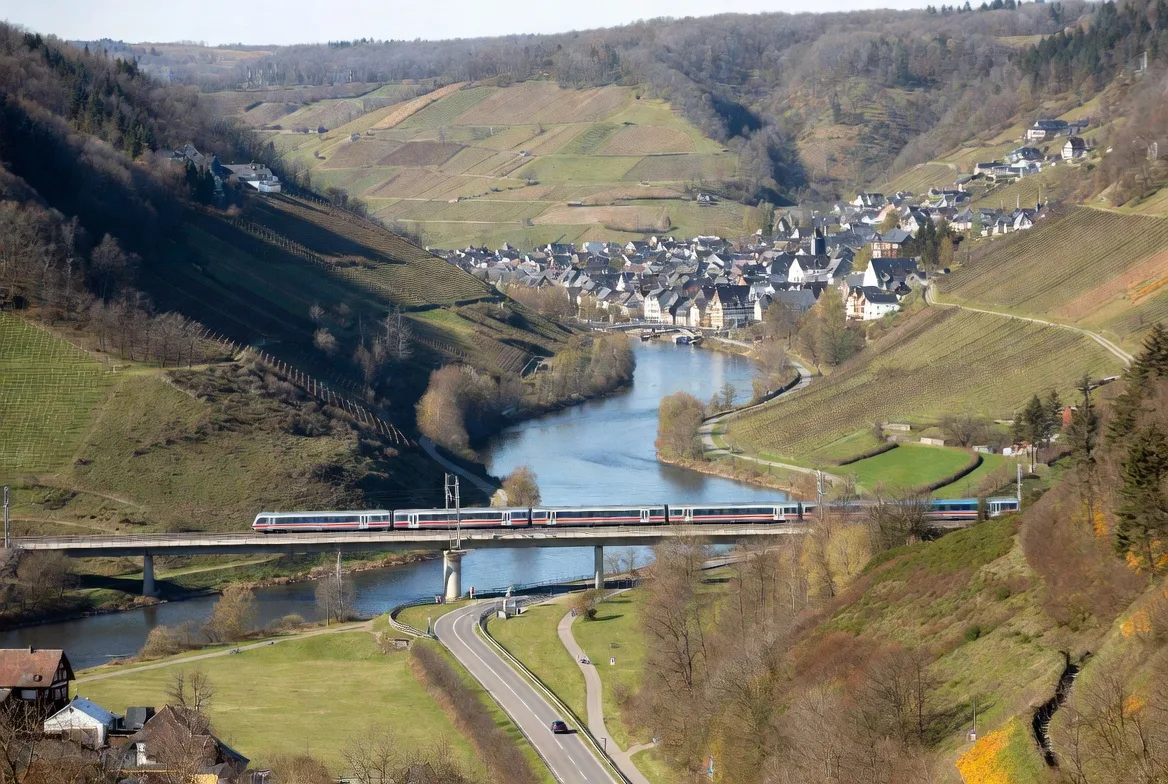
You notice it quickly in Germany: the country rewards movement. One morning begins in a stately old university city, by afternoon you are in vineyard country, and by evening you are eating by a river in a town that somehow never made it into the standard itinerary. That is why learning how to travel around Germany matters so much. The way you move shapes what kind of Germany you actually see - not just the famous landmarks, but the regional texture between them.
For most American travelers, Germany is one of Europe’s easier countries to navigate independently. The infrastructure is strong, stations are usually central, and even smaller cities tend to feel connected to a wider network. But the best approach depends on your trip. A week focused on major cities calls for different choices than a slower route through spa towns, wine villages, or the Baltic coast.
How to travel around Germany depends on the trip you want
If your goal is efficiency, trains will often make the most sense. If your goal is freedom in rural areas, a car may be worth it. If you want a mix of both, Germany handles that well too. Many travelers arrive assuming they need to choose one method and stick to it, but Germany often works best in combinations: rail for long stretches, local transit within cities, and perhaps a short car rental for a region where villages, lakes, or hilltop castles sit beyond the station network.
This is also a country where pace matters. On a map, distances can look manageable. In practice, changing hotels every night can flatten the experience. Germany is not especially large, but it is layered. A trip that looks efficient on paper can become all transit and no atmosphere. Two or three bases often reveal more than a rushed sweep across six cities.
Trains are usually the easiest way to travel around Germany
For many visitors, rail is the clearest answer to how to travel around Germany. Intercity trains connect large urban centers, while regional services reach smaller places with surprising consistency. What makes the system appealing is not only coverage, but the way stations are woven into daily life. You typically arrive near the historic center rather than on the edge of town.
For a first trip, trains work particularly well between cities such as Berlin, Hamburg, Dresden, Cologne, Frankfurt, Munich, and Nuremberg. They also suit scenic regional journeys, especially where driving can feel more tiring than liberating. Following a river valley, crossing from one former ducal capital to another, or moving between compact historic cities is often more pleasurable by rail than by road.
That said, trains are not magic. Delays happen. Tight connections can be stressful if you are carrying large luggage, traveling with children, or simply hoping for a calmer rhythm. The smartest move is to leave some margin in your day, especially if you are connecting from a long-distance train to a local one serving a smaller destination.
Germany’s regional trains deserve special mention because they open up a less obvious map of the country. They may be slower, but they often lead to the places that give a trip personality: smaller cathedral cities, old trading towns, forest-edge spa resorts, and river settlements where the station feels like an entrance to a different tempo of life.
When rail is the better choice
Choose trains if you are staying mostly in cities, if you want to avoid parking, or if your itinerary includes places where the station is part of the logic of the trip. Germany’s urban cores are generally easier to enjoy on foot and by transit than by car. In many cases, driving into the center adds friction rather than freedom.
Rail also suits travelers who enjoy looking out the window and letting the landscape change gradually. Germany’s scenery is not only alpine or dramatic. Much of its charm is cultivated and inhabited - fields, church spires, wooded ridges, allotment gardens, riverbanks, and small industrial towns with handsome old centers. Seen by train, that continuity becomes part of the story.
Driving in Germany gives you a different kind of access
There are parts of Germany where a car changes the trip for the better. This is especially true in wine regions, lake districts, stretches of the Baltic and North Sea hinterland, and rural areas where buses exist but are not designed around a visitor’s ideal day. If you want to follow your curiosity into abbey villages, castle ruins, manor-house landscapes, or scenic roads with frequent stops, driving can be excellent.
The trade-off is that driving is most useful between places, not within them. Historic town centers can be intricate, parking may be limited, and environmental rules in some cities can complicate matters for visitors unfamiliar with local regulations. A good strategy is to pick up a car only when you leave the city portion of your trip and return it before the next urban stay.
American drivers often find Germany orderly rather than difficult. Roads are well maintained, signage is generally clear, and rural driving can be deeply enjoyable. Still, the experience varies by region. In mountain areas, winter weather can change conditions. In dense urban corridors, traffic can feel less romantic than the countryside that lies beyond them.
When a car is worth it
A car makes sense when your route centers on landscapes and villages rather than major cities, when you are carrying more than you want to haul through stations, or when you want the freedom to stop at viewpoints, local inns, and lesser-visited towns that sit between rail lines.
It is also useful for travelers who prefer one scenic base and several day trips. In that scenario, the car becomes a tool rather than a burden. You are not driving constantly. You are widening your radius.
Local transit in German cities is often better than visitors expect
Once you arrive in a city, public transit usually takes over. U-Bahn, S-Bahn, trams, and buses form the practical skeleton of urban travel in Germany. Even where the network looks complicated at first, it tends to become intuitive after a day or two.
This matters because many of Germany’s most interesting urban experiences are not confined to one old town square. A museum district may sit apart from the medieval center. A former industrial quarter may now hold galleries, design shops, or notable architecture. A city lake, riverfront promenade, or neighborhood market may be a short tram ride away. Using local transit lets you experience the city as residents do, not merely as a cluster of sights.
Walking, of course, remains essential. Germany is full of cities best understood at street level - through courtyards, church closes, arcades, river embankments, and residential districts where everyday beauty reveals itself slowly. Transit gets you across the city. Walking tells you where you are.
How to plan a route without seeing only stations and highways
The best German itineraries are often built around regions, not just famous names. Instead of racing from Berlin to Munich to the Rhine to Hamburg, consider giving yourself a geographic logic. Saxony, for example, works beautifully by rail, with cultural cities and landscape close together. Parts of Bavaria reward a train-and-bus combination, while some wine regions become easier and richer with a car.
Think in clusters. Pair one major city with two smaller places nearby. Stay long enough to have an unplanned afternoon. Let transportation support the mood of the trip rather than dominate it.
This is especially important in Germany because so much of the country’s appeal lies in contrast. Grandeur and modesty sit close together. A baroque residence town may be followed by a working river port or a village with timbered houses and a serious local museum. The more naturally you move between such places, the more coherent the country feels.
Practical advice for traveling around Germany
Pack lighter than you think you need. Germany is easy to navigate, but stairs, platforms, cobbled streets, and hotel entries still exist. A compact suitcase changes the tone of a rail journey.
Build in flexibility. If you have only one chance to visit a particular concert, museum, or town, give yourself extra margin on the travel day. If your plan is looser, Germany becomes far less stressful.
Pay attention to Sundays and regional rhythms. Some places feel beautifully calm; others can feel almost paused. That can be part of the pleasure, but it helps to anticipate it.
Above all, resist treating transportation as a technical problem to solve once and forget. In Germany, it is part of the experience itself. A trip by rail along a river, a tram ride into a grand old city quarter, a drive through orchard country toward a small spa town - these are not just ways of getting there. They are part of what you came for.
If you choose your pace carefully, Germany begins to feel less like a checklist and more like a connected set of worlds, each one reached in a way that suits it.